Rev. Jesse Jackson’s Jacksonville visits put voting access, policing, and local candidates into sharper focus
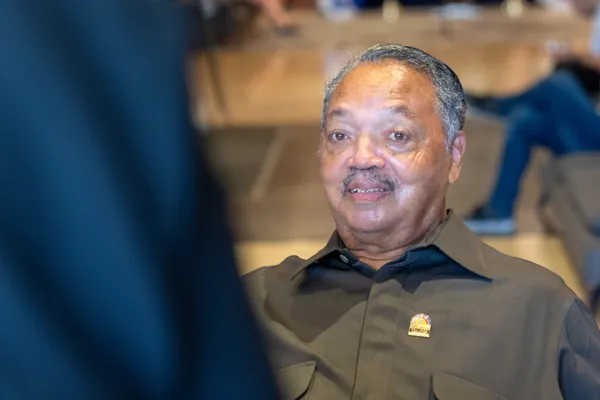
Jacksonville stop highlights recurring civil-rights agenda in local politics
The Rev. Jesse L. Jackson’s appearances in Jacksonville have repeatedly centered on a consistent set of themes: voting access, civic participation, and how local leadership decisions affect historically marginalized communities. Across multiple visits over the years, his schedule in the city has typically combined meetings with faith leaders and community advocates with public calls for voter turnout and policy-focused engagement with candidates.
In Jacksonville, Jackson has used church-based events as organizing hubs, reflecting a longstanding role that Black churches have played in voter mobilization and community advocacy. During a prominent get-out-the-vote push in the city, he took part in “Souls to the Polls” events alongside elected officials, urging residents to cast ballots and framing issues such as wages, health coverage, and voting rights as directly tied to election outcomes.
Voting rights and election administration remain central to the message
Jackson’s involvement in Jacksonville has also intersected with controversies over election administration. In one high-profile instance tied to disputed ballots and claims of voter confusion in Duval County, civil-rights leaders characterized the situation as a serious threat to fair participation and came to Jacksonville to rally and hear complaints from voters. The episode became part of a broader national debate over ballot design, access, and the mechanics of counting votes—issues that continue to influence how local and state officials approach election procedures.
In later visits, Jackson’s public remarks again emphasized voter participation and concerns about barriers to the ballot box, including the impact of felony disenfranchisement policies in Florida. His message has frequently urged voters to evaluate candidates based on policy direction and governance priorities, rather than identity or party symbolism alone.
Public safety and justice issues extend beyond city limits
Jacksonville has also served as a staging point for regional justice advocacy. In 2021, Jackson met with faith leaders in Jacksonville as local activists planned a march connected to the Ahmaud Arbery case in neighboring Glynn County, Georgia. The meeting underscored how Jacksonville’s civic networks often engage with issues that cross jurisdictional lines, including high-profile criminal proceedings and the role of public demonstrations in shaping attention to legal processes.
Campaign-season context: candidates and issues converge
Jackson’s Jacksonville visits have often coincided with periods of heightened electoral activity, when candidates seek support and local coalitions concentrate on turnout operations. While Jacksonville’s elections feature a wide range of local concerns—such as public safety, infrastructure, and government accountability—Jackson’s recurring focus has remained on the practical mechanisms of participation: registration, early voting, and community-based mobilization.
- Voter registration and turnout efforts anchored in faith communities
- Concerns about administrative barriers that can discourage participation
- Policy-driven evaluation of candidates on bread-and-butter issues
Jackson’s Jacksonville appearances have consistently linked election participation to concrete policy outcomes, while keeping attention on access to the ballot and community organizing infrastructure.
Jackson, a national civil-rights figure for decades, died on February 17, 2026, at age 84. His Jacksonville visits remain part of a broader record of engagement in North Florida that connected local candidates and issues to national debates over voting rights and justice.