Jacksonville issues demolition permit tied to Otto Aerospace plans for new Cecil Airport manufacturing complex
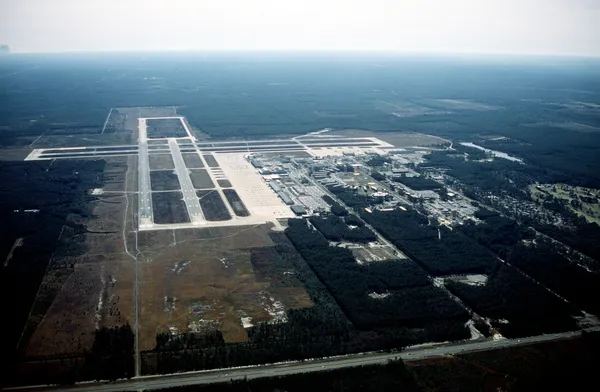
Permit action signals early site work as aerospace project advances at Cecil
The City of Jacksonville has issued a demolition permit connected to Otto Aerospace’s planned development at Cecil Airport, a city-owned aviation and industrial campus on Jacksonville’s Westside. The permit represents an early, procedural step that typically precedes clearing legacy structures and preparing property for new construction.
Otto Aerospace has publicly announced plans to establish an advanced manufacturing facility and corporate headquarters at Cecil Airport, positioning the site for aircraft production and related operations. The company has identified the Phantom 3500 business jet as the program it intends to build in Jacksonville as the project scales.
How the project has been structured so far
Local and regional incentives have been assembled alongside airport-side infrastructure work to support the relocation and construction plan. In mid-2025, Jacksonville City Council approved a long-term property tax rebate arrangement structured as a Recapture Enhanced Value grant, with the city’s participation capped at $20 million over a 20-year term. The action authorized an economic development agreement intended to support a headquarters and manufacturing facility on leased property at Cecil Airport.
In parallel, the Jacksonville Aviation Authority approved agreements enabling Otto’s initial presence at Cecil, including a lease arrangement involving Hangar 825 and a ground lease for a future development site. The hangar—previously used by Boeing—has been described as a near-term operating location while the larger manufacturing campus is developed.
- City incentive structure: a 20-year, performance-based REV grant, capped at $20 million.
- Airport-side readiness: agreements for existing hangar use and a separate ground lease for a future build site.
- Project expectations: significant private capital investment and job-creation benchmarks embedded in the city agreement.
What a demolition permit typically means—and what it does not
Demolition permitting does not, by itself, confirm the start date or scope of full construction. However, in large-scale industrial projects it often aligns with site preparation activities such as removal of obsolete structures, environmental and safety compliance steps, and sequencing work needed before foundations and utilities can be installed.
Large aviation manufacturing developments frequently proceed in phases: interim operations in existing facilities, followed by graded and cleared acreage for purpose-built production buildings.
Broader context: growth pressure at Cecil Airport
Cecil Airport has been a focal point for aviation and aerospace growth, with the Jacksonville Aviation Authority also describing broader expansion and support amenities intended to serve an increasing on-site workforce. Otto Aerospace’s project fits within that trajectory, combining industrial development with airfield-adjacent operations.
Next milestones typically associated with projects of this type include additional city permitting for vertical construction, utility and roadway/taxiway work, and execution deadlines and performance milestones tied to economic development agreements.