Jacksonville community remembers 104-year-old World War II veteran with military honors and public remembrance traditions
A generation’s remaining witnesses
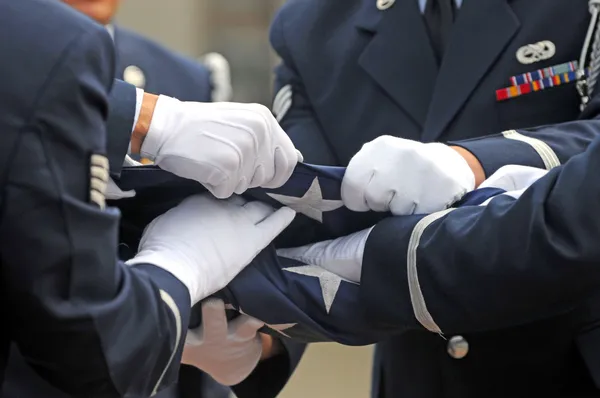
A 104-year-old World War II veteran from Florida’s First Coast was remembered in Jacksonville with military funeral honors, marking the loss of another member of the rapidly shrinking cohort of Americans who served during the 1941–1945 conflict. Military honors at funerals typically include a flag presentation to next of kin, ceremonial rifle volleys, and the playing of “Taps,” practices meant to formally recognize a veteran’s service.
Local remembrances of World War II service have become increasingly time-sensitive. With the war ending more than eight decades ago, the oldest veterans now commonly reach advanced ages, and memorial events frequently serve both as personal farewells and as community moments to preserve firsthand history.
What full military honors represent
Military funeral honors are administered under federal standards and, at a minimum, require the presence of an honor guard and the folding and presentation of the U.S. flag. In many cases, additional ceremonial elements are provided by service members and veteran organizations. For families, the ceremony often functions as a structured way to translate a lifetime of service into a public act of recognition, particularly when much of that service occurred far from home or outside public view.
Jacksonville’s established framework for remembrance
Jacksonville has long maintained public spaces and civic rituals dedicated to military service and sacrifice. One central location is the Jacksonville Veterans Memorial Wall, a black granite monument in downtown Jacksonville adjacent to EverBank Stadium. The wall honors more than 1,700 Jacksonville-area service members spanning conflicts from World War I through the War on Terror, and it serves as a focal point for annual Memorial Day observances where new names are added when eligibility requirements are met.
The memorial’s design emphasizes permanence through etched names and an eternal flame.
Annual ceremonies provide a recurring public setting for families and community members to mark losses from different eras of U.S. military service.
Why these services draw community attention
As World War II veterans pass away, communities face a practical question: how to sustain public memory when direct testimony is disappearing. In Jacksonville, military honors ceremonies and established memorial sites are among the tools used to maintain continuity between private family grief and public recognition of national service.
Military funeral honors function both as a family rite and as an institutional acknowledgment that service carried obligations and risks on behalf of the broader public.
The veteran remembered this week joins a narrowing list of remaining World War II service members in Northeast Florida, reinforcing the historical reality that each funeral now also marks a transition—from lived experience to recorded memory.