Five Measles Cases Confirmed in Duval County as Jacksonville Health Leaders Urge Provider Vaccination Checks
Duval County records five confirmed measles infections
Duval County has confirmed five measles cases in 2026, prompting local public health leaders to characterize the situation as an outbreak and to issue guidance to healthcare providers across the Jacksonville area. The fifth confirmed case was communicated to medical partners before it appeared on the state’s online disease-tracking dashboard, reflecting timing gaps that can occur between confirmation, reporting and public posting.
Messages distributed to hospitals and medical organizations urged healthcare facilities to verify that personnel have received two doses of the measles, mumps and rubella (MMR) vaccine at the recommended interval. Public health officials emphasized that vaccination status among healthcare workers is a key control measure because clinical settings can amplify spread when a highly contagious respiratory virus is introduced.
What measles is and why it spreads quickly
Measles is a viral illness that spreads through the air when an infected person breathes, coughs or sneezes. The virus can remain infectious in the air and on some surfaces for up to two hours after an infected person leaves an area. People are typically contagious before the characteristic rash appears, which complicates efforts to prevent exposures.
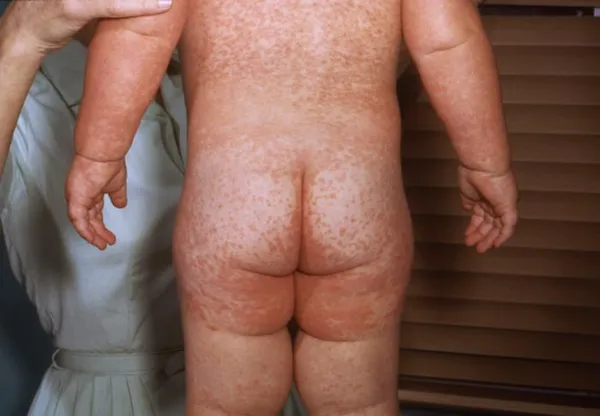
Symptoms commonly begin 7 to 14 days after exposure and can include high fever, cough, runny nose and red, watery eyes, followed by a rash that often starts on the face and spreads. There is no specific antiviral cure; care focuses on managing symptoms and preventing complications. In some cases, measles can cause severe disease such as pneumonia or inflammation of the brain.
How public health response typically works after a confirmed case
Once a case is confirmed, health investigators generally identify close contacts and assess immunity status to determine who may be at risk. People who lack evidence of immunity may be offered post-exposure measures when they meet medical criteria and are within specific time windows after exposure.
- MMR vaccine may reduce the risk of illness if given within 72 hours of exposure in eligible individuals.
- Immune globulin may be used for certain higher-risk people—such as infants too young to be routinely vaccinated, pregnant people, or individuals with weakened immune systems—if given within six days of exposure.
- People who were exposed are typically advised to monitor for symptoms for 21 days.
What residents should do if they suspect measles
Individuals who believe they may have measles are generally advised to call ahead before going to a clinic or emergency department so healthcare teams can provide instructions that reduce exposure to others.
Health officials continue to focus on limiting transmission through vaccination verification, rapid identification of exposures and clear guidance to clinical providers. The five confirmed Duval cases add to a broader national increase in measles activity reported in early 2026.